Safety, responsibility and respect
The River Is Still Wild
What the Silver River alligator attack can teach us about safety, responsibility and respect.
On Saturday, August 8, a woman suffered a devastating injury when she was attacked by an alligator near Ray Wayside Park on the Silver River.
In the hours that followed, the story quickly spread across social media. As often happens after a serious wildlife encounter, confirmed information became mixed with rumors, assumptions and speculation. Some people responded with fear. Others responded with anger. Many immediately began assigning blame.
But incidents like this deserve more than a frightening headline or a quick reaction.
They deserve compassion. They also deserve context.
According to information I received from a trusted and reliable source familiar with the incident, a woman in her 50s launched from Ray Wayside with a boogie board and began free swimming down the Silver River.
While she was swimming, an alligator attacked her, causing a devastating injury to her arm.
A nearby boater heard her screams, pulled her from the water and transported her back to the boat ramp. Emergency personnel were then able to take over and transport her for medical care.
Some details surrounding the incident may become clearer as authorities complete their investigation. What is already clear, however, is that this woman experienced something horrific and life-changing.
Before discussing rules, personal responsibility or wildlife behavior, that human reality must be acknowledged.
She is a person and not merely the subject of a news story, a social media debate or an example used to prove someone's point. She has family and friends who are undoubtedly hurting alongside her. She deserves compassion, privacy and the best medical care available.
Acknowledging the circumstances surrounding the attack does not take away from that compassion.
It gives us the opportunity to learn from what happened.
River access restored
Following the incident, paddling operations on the Silver River were temporarily suspended while FWC conducted its response.
FWC later removed an alligator from the area believed to match the description of the animal involved in the attack. Authorities then permitted paddle craft to return to the river, and normal paddling operations resumed on Sunday at 10:30 a.m.
The reopening of the river reinforces an important distinction. Authorities have permitted kayaking, canoeing and paddleboarding to resume. This incident should not be interpreted as evidence that paddling the Silver River has suddenly become unsafe.
The context matters
Swimming in the Silver River is not permitted.
That fact is not a minor technicality. It is an essential part of understanding what occurred.
This was not a paddler sitting in a kayak who was unexpectedly pulled from the vessel by an alligator. It was not someone standing on a dock or walking along the shoreline. The attack occurred while someone was physically swimming through known alligator habitat in an area where swimming is prohibited.
That does not mean she deserved to be injured.
No one deserves what happened to her.
It means the circumstances matter when we evaluate the risk to other visitors and consider what this incident tells us about the Silver River.
There is an important difference between being on the water and being in the water.
Thousands of people safely paddle Florida's rivers, lakes and wetlands every year in places inhabited by alligators. No outdoor activity is entirely without risk, but paddling a kayak, canoe or paddleboard is very different from placing your body directly into the water.
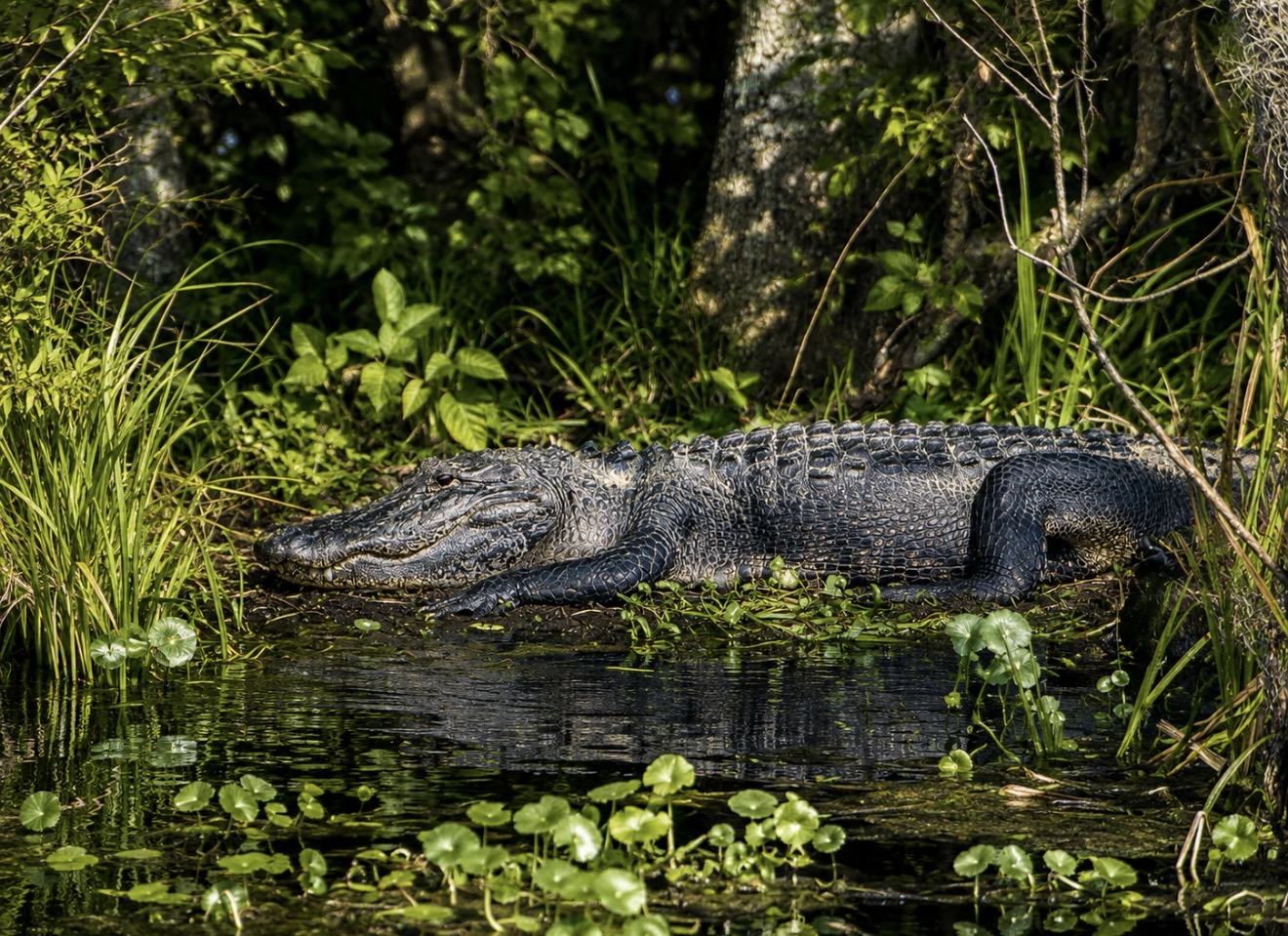
Alligators are aquatic predators. Much of their body remains concealed below the surface, even in clear water. Their behavior can be affected by distance, available habitat, previous interactions with people and the circumstances of a particular encounter.
Entering the water changes that encounter.
This is one reason rules governing natural areas should not be dismissed as inconvenient suggestions.
The river did not change overnight
After a serious wildlife encounter, it is natural for people to wonder whether a place is still safe.
The Silver River did not suddenly become dangerous on August 8.
It was a wild river on August 7, and it remains a wild river today.
Alligators have always lived here. They were present long before kayaks, glass-bottom boats, tour companies, social media photographs or crowds of visitors arrived. They are not trespassing in a recreational area. We are being permitted to recreate in their habitat.
That distinction is important.
The same river that gives us opportunities to observe manatees, turtles, otters and hundreds of species of birds is also home to predators. We cannot celebrate the river for being wild and then become angry when its wildlife behaves like wildlife.
An alligator is not evil because it is capable of harming a person.
It is also not harmless simply because it has ignored hundreds of people in the past.
Both of those statements can be true.
Respecting wildlife means resisting the temptation to turn animals into heroes or villains. They are neither. They are wild animals responding to instinct, surroundings and circumstances that we may not completely understand.
Rules are written for real reasons
“No swimming” is one of several rules people sometimes disregard because they do not immediately see the danger.
The water is clear. The surroundings are beautiful. Other people may have broken the same rule without experiencing any consequences. That can create a false sense of security.
But the absence of a previous consequence does not make a dangerous decision safe.
The same principle applies to other rules:
No swimming means no swimming.
Do not feed wildlife means do not feed wildlife.
Give wildlife space means give wildlife space.
Do not touch or harass animals means exactly that.
Rules in parks and natural areas are not created simply to interfere with someone's enjoyment. Many exist because officials and wildlife professionals understand risks that may not be apparent during a brief visit.
Some protect people from wildlife.
Others protect wildlife from people.
Most do both.
Feeding an alligator, for example, can cause it to associate people with food. An animal that once kept its distance may begin approaching boats or shorelines. One person may receive the excitement of a close encounter, while the next visitor and ultimately the alligator face the consequences.
Crowding a resting manatee may force it to move before it is ready. Chasing wildlife for a photograph can interrupt feeding, resting or caring for young. Entering prohibited water can place the swimmer, rescuers and animals at risk.
Our actions do not occur in isolation simply because we are outdoors.
Consequences on both sides
Following the attack, FWC removed an alligator from the area as part of its response.
That creates another difficult part of this story.
A woman suffered a life-changing injury. At the same time, a wild animal was removed from its habitat following an encounter that occurred within that habitat.
Recognizing this does not suggest that the life of an alligator is more important than the life or safety of a person. It is not an attempt to minimize the woman's suffering.
It is an acknowledgment that decisions made in wild places can carry consequences beyond the person making them.
Those consequences may reach the person who attempts a rescue. They may affect first responders and wildlife officers. They may temporarily close an area used by visitors and local businesses. They may also result in an animal being removed from the ecosystem.
The alligator did not leave the Silver River and enter our world. We entered its world.
That does not mean people should stay away. It means we have a responsibility to behave accordingly while we are there.
Compassion and accountability can coexist
Public conversations often push us toward one of two extremes.
We are told that we must either condemn a person for making a poor decision or ignore the decision completely because the outcome was tragic. We are expected to choose between compassion and accountability.
We do not have to choose.
We can feel tremendous compassion for the woman who was injured while also recognizing that swimming was prohibited.
We can acknowledge the danger posed by an alligator without portraying the animal as a monster.
We can discuss personal responsibility without cruelty.
We can protect the public without creating unnecessary fear.
Seeing both sides does not weaken the message. It makes the message more honest.
If we refuse to discuss the circumstances, we lose an opportunity to help prevent another tragedy. If we discuss them without compassion, we lose sight of the human being at the center of the story.
Both matter.
Come back, but come with respect
The Silver River has reopened to paddle craft, and this incident should not cause people to become afraid of visiting it.
Come back and experience the river.
Paddle a kayak or canoe. Explore by paddleboard. Watch the manatees move beneath the surface. Look for turtles resting on fallen trees. Listen for the calls of birds hidden along the shoreline.
And yes, appreciate the opportunity to see an alligator in its natural habitat from a respectful distance.
Do not approach it for a closer photograph. Do not feed it. Do not attempt to touch it. Do not enter the water. Never assume that an animal is tame because it appears calm or has been seen around people before.
Wildlife does not need to behave aggressively before it deserves space.
The goal should never be to remove every element of risk until the river becomes little more than an outdoor amusement park. The wildness of the Silver River is not a flaw that needs to be corrected.
It is one of the greatest things remaining about it.
Our responsibility is to enter with humility, follow the rules and make choices that protect the river's wildlife, other visitors and ourselves.
The Silver River is beautiful.
The Silver River is peaceful.
The Silver River is also wild.
Those truths do not contradict one another. Together, they explain why this place deserves both our admiration and our respect.
Respect the rules.
Respect the wildlife.
Respect the river.
Sometimes following the rules protects us. Sometimes it protects the wildlife.
Most of the time, it does both.
Share this story
If this note from the river stayed with you, pass it along.
Respect the river
Experience the Silver River without forgetting that it is wild.
Explore responsibly, give wildlife room and allow the river to remain the place that makes the experience possible.